Un nuevo enfoque en la seguridad del transporte de baterías: ¿La importancia de la prueba de fuerza de sujeción del embalaje?
Jan 29, 2026
Un nuevo enfoque en la seguridad del transporte de baterías: ¿La importancia de las pruebas de fuerza de sujeción del embalaje?
Con el crecimiento de la industria de las nuevas energías, diversos productos de baterías, como las baterías de litio y las baterías de almacenamiento, han penetrado profundamente en múltiples campos, incluidos los vehículos de nuevas energías, el almacenamiento de energía, la electrónica de consumo y los dispositivos médicos. En consecuencia, la demanda de transporte de baterías también ha mostrado un crecimiento exponencial. Sin embargo, como categoría especial de mercancías peligrosas, las baterías siempre han atraído una estrecha atención con respecto a los riesgos de seguridad durante el transporte. Además de los riesgos tradicionales como las altas temperaturas, las colisiones y los cortocircuitos, los accidentes de seguridad causados por el proceso de sujeción del embalaje han ido aumentando año tras año, convirtiéndose en un nuevo foco de atención en el campo de la seguridad del transporte de baterías.
Riesgos reales a los que se enfrenta el embalaje de baterías durante la carga y descarga
En todo el proceso de transporte de baterías, las operaciones de sujeción son una etapa de alta frecuencia para el daño del embalaje. Escenarios como la carga y descarga con carretillas elevadoras en puertos y almacenes, y el apilamiento de carga, requieren que el embalaje resista fuerzas de compresión desde ambos lados. Una vez que la capacidad de carga no cumple con los requisitos, se pueden desencadenar una serie de riesgos:
La estructura del embalaje se comprime y deforma, provocando una tensión desigual en los módulos de batería internos
La resistencia insuficiente de la caja conduce a daños irreversibles que no son fáciles de detectar
Riesgos de seguridad ocultos que pueden estallar colectivamente durante las etapas posteriores de transporte o uso
Esta es precisamente la razón por la que cada vez más empresas están empezando a dar importancia a las pruebas de fuerza de sujeción del embalaje.
¿Qué son las pruebas de fuerza de sujeción del embalaje?
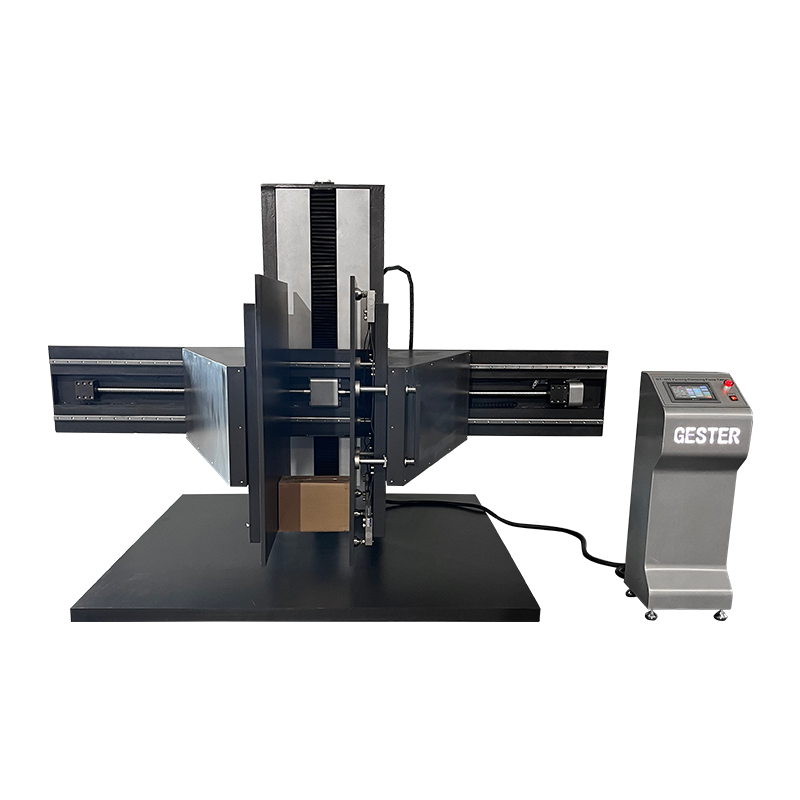
La máquina de pruebas de fuerza de sujeción del embalaje se utiliza para la simulación cuando el vehículo de sujeción carga y descarga el embalaje, la fuerza de sujeción entre dos placas de madera impacta en el embalaje y los productos, para probar y evaluar la resistencia de sujeción del embalaje.
¿Por qué el transporte de baterías debe realizar pruebas de fuerza de sujeción?
Verificar la capacidad de carga de sujeción del embalaje: Determinar la fuerza de sujeción máxima que el embalaje puede soportar durante las operaciones normales de sujeción, asegurando que el embalaje no se dañe ni se deforme debido a una fuerza de sujeción excesiva.
Identificar defectos en el diseño del embalaje: A través de las pruebas, descubrir defectos en el diseño estructural, la selección de materiales, la protección de amortiguación y otros aspectos del embalaje, como una resistencia insuficiente del material, una disposición irrazonable de los materiales de amortiguación o un diseño inadecuado de los puntos de tensión de sujeción, proporcionando soporte de datos para la optimización del embalaje.
Garantizar la seguridad del transporte de baterías: A través de pruebas previas, asegurar que el embalaje pueda proteger eficazmente las baterías internas y prevenir accidentes como cortocircuitos, fugas o incendios causados por daños de sujeción.
Cumplir con los requisitos de cumplimiento: A través de las pruebas y la obtención de informes calificados, asegurar que el embalaje de baterías de la empresa cumpla con las regulaciones y estándares nacionales e internacionales pertinentes, evitando sanciones debido al incumplimiento y asegurando un transporte fluido y el acceso al mercado de los productos.
Reducir los riesgos operativos de la empresa: Identificar los riesgos de seguridad en el proceso de sujeción por adelantado, reducir los costos causados por daños a la carga, compensaciones por accidentes y sanciones de cumplimiento debido a daños en el embalaje, y mejorar la estabilidad de las operaciones de la empresa.
La importancia de las aplicaciones de las máquinas de pruebas de fuerza de sujeción del embalaje
Las máquinas profesionales de pruebas de fuerza de sujeción del embalaje son el requisito previo para la eficacia de las pruebas de fuerza de sujeción. Si las empresas utilizan equipos de prueba con precisión insuficiente o una simulación poco realista de las condiciones de trabajo, no solo no obtendrán datos de prueba precisos, sino que también pueden inducir a error en el diseño del embalaje y en los juicios de cumplimiento, lo que resultará en que embalajes no calificados entren al mercado y causen accidentes de seguridad y riesgos de cumplimiento. La aplicación de equipos de prueba de alta calidad, como los de GESTER Máquina de pruebas de fuerza de sujeción del embalaje puede garantizar la precisión y fiabilidad de los resultados de las pruebas, proporcionar un fuerte apoyo para las operaciones de cumplimiento de la empresa y la optimización del embalaje, y resaltar aún más el profesionalismo y la importancia de las pruebas de fuerza de sujeción.
Con el desarrollo continuo de la industria de las nuevas energías, la escala del transporte de baterías seguirá expandiéndose y la importancia de la seguridad del transporte será cada vez más prominente. Como medida central para prevenir los riesgos de seguridad en la etapa de sujeción del transporte de baterías, las pruebas de fuerza de sujeción del embalaje no solo son un requisito previo para las operaciones de cumplimiento de la empresa, sino también una medida clave para salvaguardar la seguridad de la vida del personal y la seguridad del entorno ecológico, reducir los riesgos operativos de la empresa y mejorar la competitividad central.